
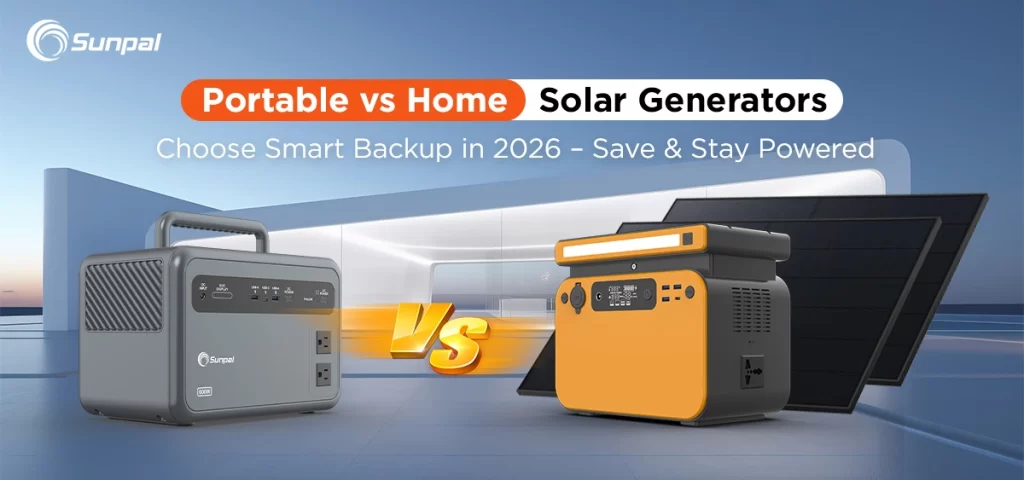
In 2026, the solar energy storage market is exploding. U.S. battery energy storage system (BESS) deployments are projected to hit 70 GWh — a 23% jump from 2025 — powering millions of homes amid rising outages and electricity bills.
For solar companies, businesses, and homeowners searching for best solar generators 2026, solar battery storage solutions, or off-grid solar power systems, the big question remains: portable solar power stations or whole-home solar battery backup?
This guide delivers a fresh, data-driven perspective on the solar generator comparison that matters most right now. Discover which option delivers faster ROI, true resilience, and maximum savings in today's booming renewable landscape — without the fluff.
Understanding Portable Solar Power Stations
Portable solar generators (also called portable solar power stations) combine a high-capacity lithium battery, built-in inverter, and solar input ports into one compact, grab-and-go unit. Typical capacities range from 300Wh to 5kWh, with top 2026 models like expandable 2–3kWh units recharging via foldable solar panels in 2–4 hours. They deliver AC, USB-C, and DC outlets for everything from phones to mini-fridges.
Key advantages in 2026:
- Zero installation — plug in and power up instantly.
- Perfect for camping, RV travel, job sites, or short outages.
- Quiet, emission-free operation.
- Entry prices starting under $1,000 for reliable best portable solar generators.
Limitations? They excel at essential loads but struggle with whole-home demands like HVAC or electric dryers for more than a few hours.
Data Insight 1: Runtime Reality Check
Here's a quick analysis of real-world performance (based on 2026 tested models):
| Load Type | 1kWh Portable Station | 5kWh Portable Station |
| Phone + Laptop (50W) | 18–20 hours | 90+ hours |
| Mini-Fridge (100W) | 9–10 hours | 45+ hours |
| CPAP + Lights (150W) | 6 hours | 30+ hours |
| Full Recharge Time (400W solar) | 2.5 hours | 6–8 hours |
This chart shows why portable solar power stations dominate short-term, mobile needs — delivering 8–24 hours of critical power without fuel or noise.
Exploring Home Solar Battery Backup Systems
Home solar generator systems pair rooftop or ground-mount solar panels (5–20kW) with large-scale lithium battery storage (10–60kWh) and a hybrid inverter. These setups tie into your electrical panel for automatic, seamless backup.
In 2026, home solar battery storage systems shine for daily energy bill reduction via net metering and time-of-use optimization — plus indefinite runtime when paired with solar recharging.
Key advantages:
- Powers your entire home (or selected critical circuits) for days or weeks.
- Automatic switchover during outages — no manual intervention.
- Long-term savings: average payback of 6–10 years after federal incentives.
- Boosts property value and qualifies for 30% Investment Tax Credit.
Downsides include higher upfront investment and professional installation. Yet with the solar energy storage market surging, costs per kWh continue dropping rapidly.
Data Insight 2: 2026 Market Growth Snapshot
U.S. energy storage deployments tell the story of why home systems are gaining traction:
| Year | Annual BESS Installations | Utility-Scale Share | Behind-the-Meter (Home/Commercial) |
| 2025 | 57 GWh | 87% | 13% |
| 2026 | 70 GWh (projected) | 89% | 11% (still growing fast) |
This 23% year-over-year leap (per SEIA Q1 2026 Outlook) means solar battery storage solutions are no longer luxury — they're mainstream resilience tools, especially for businesses and homeowners facing prolonged outages.
Head-to-Head Comparison: Best Solar Generators 2026
Choosing between portable solar generators and home solar battery backup systems boils down to your lifestyle, budget, and outage risk.
Data Insight 3: Cost & ROI Analysis
Here's the clearest 2026 breakdown:
| Feature | Portable Solar Power Station | Home Solar Battery Storage System |
| Typical Capacity | 300Wh–5kWh | 10–60kWh |
| Upfront Cost (2026 avg.) | $500–$3,500 | $15,000–$40,000 (before 30% ITC) |
| Installation | None | Professional required |
| Automatic Backup | Manual | Seamless (zero interruption) |
| Daily Bill Savings | Minimal | High (self-consumption + net metering) |
| Payback Period | 1–3 years (occasional use) | 6–10 years (with solar + incentives) |
| Best For | Mobility, short outages, renters | Whole-home resilience, long-term savings |
Portable options win on speed and flexibility. Home systems dominate on total value — especially as solar panel prices and battery costs keep falling. Businesses searching solar backup power solutions increasingly combine both for maximum coverage.
When to Choose Portable Solar Generators
Pick a portable solar power station if you:
- Travel frequently or live in an apartment/rental.
- Need quick backup for essentials during brief outages.
- Want an affordable entry into off-grid solar solutions without commitment.
- Run job sites, tailgates, or emergency medical equipment on the move.
In 2026, these units have evolved into true best portable solar generators — with app monitoring, expansion batteries, and solar input up to 1,400W. They deliver freedom without complexity, making them ideal for solar companies offering quick-demo rentals or starter kits.
When Home Solar Battery Storage Systems Deliver Maximum Value
Choose a home solar generator system when you:
- Own your property and face frequent or extended outages.
- Want to slash monthly electricity bills year-round.
- Plan to stay long-term and build true energy independence.
- Need to power heavy loads (EV charging, HVAC, appliances).
With the solar energy storage market booming, these systems now offer silent, fuel-free operation plus smart app controls. Homeowners and businesses report 50–80% bill reductions — turning solar battery storage into a smart investment rather than an expense.
Hybrid Approaches and Emerging 2026 Trends
Smart users combine both: a home solar battery backup system for base-load resilience plus portable units for travel or extra capacity. Top trends this year include:
- Expandable portable stations reaching 10kWh+ when stacked.
- AI-driven home systems that optimize for time-of-use rates.
- Falling battery prices (down 20%+ since 2024) and stronger incentives.
At Sunpal, we engineer both portable solar power stations and scalable home solar battery storage systems — designed to grow with your needs in this fast-evolving market.
Final Verdict: Make the Right Solar Choice in 2026
There's no universal winner in the portable solar generators vs home solar battery storage debate — only the solution that matches your power goals.
Portable units offer instant freedom and low commitment. Home systems unlock massive long-term savings and whole-home security.
Assess your outage frequency, budget, and lifestyle today. With the solar energy storage market on track for record growth, the smartest move is acting now to secure clean, reliable power. Explore Sunpa's full range of best solar generators 2026 and solar battery storage solutions. Contact our experts for a personalized assessment — and start your journey toward true energy independence.