
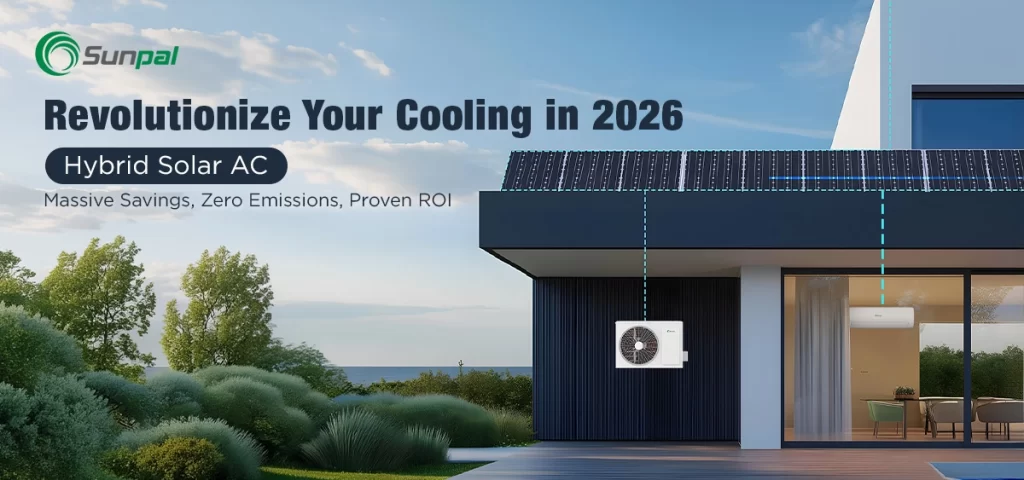
Is solar-powered cooling finally ready to slash your business energy bills in 2026? With cooling demands skyrocketing amid record heatwaves and stricter sustainability regulations, forward-thinking companies are increasingly adopting hybrid solar AC systems to deliver powerful, low-cost, and environmentally responsible air conditioning. In 2026, solar panel prices have hit historic lows—often stabilizing at $2.50–$3.50 per watt before incentives—while efficiency breakthroughs in photovoltaic and hybrid technologies have made solar powered air conditioning a mainstream, high-ROI choice rather than an experimental one. This shift enables businesses to dramatically cut operational costs, shrink carbon footprints, and future-proof against rising grid electricity rates.
This article dives into the current viability of solar cooling solutions, spotlighting the latest technological advances, robust market momentum (with projections showing 10-12% CAGR in key segments through 2035), compelling payback periods, and real-world deployment strategies. At Sunpal, we excel at customizing these hybrid solar cooling systems to optimize your solar AC ROI and perfectly match your commercial objectives.
Breakthroughs Driving Solar Cooling Viability
Recent innovations in solar cooling technology are transforming how businesses approach HVAC needs. High-efficiency photovoltaic panels, now boasting conversion rates of 24-27% through heterojunction (HJT) and tunnel oxide passivated contact (TOPCon) designs, directly power air conditioning units with minimal losses. Perovskite-silicon tandem cells are pushing boundaries further, approaching 30% efficiency in labs, making solar HVAC viable even in variable climates.
Passive radiative cooling materials, like hydroscopic composites from KAUST research, absorb nighttime moisture and release it daytime, dropping panel temperatures by up to 9.4°C. This boosts output by 12.9% and extends system life by over 200%, slashing maintenance costs. Metamaterial advancements enable self-adaptive cooling, tuning heat rejection for optimal performance in high-demand settings like data centers or warehouses.
Hybrid inverters integrate seamlessly, allowing DC-direct operation that cuts conversion inefficiencies by 10-15%. For solar companies searching for "advances in solar cooling technology," these developments mean scalable solutions: from rooftop installations offsetting 70% of cooling loads to fully off-grid setups with battery backups. Environmental benefits are clear—zero-emission operation during peak hours aligns with global decarbonization targets.
To visualize progress, here's a timeline of solar panel efficiency improvements:
These leaps make 2026 a pivotal year for adopting solar powered air conditioning, offering businesses reliable, cost-effective alternatives to grid-dependent systems.
Market Trends and Growth Projections for Solar Powered Air Conditioning
The solar air conditioning market is accelerating, driven by rising electricity prices and regulatory pushes for green energy. Valued at USD 504 million in 2024, it's projected to reach USD 605 million by 2034 with a 2.7% CAGR, per Intel Market Research. However, niche segments like DC photovoltaic AC are booming: from USD 986 million in 2026 to USD 2,590 million by 2032 at 17.3% CAGR.
IndexBox forecasts a robust 12% CAGR through 2035, fueled by demand in hot regions and integration with smart grids. For businesses querying "solar AC market growth projections," this signals opportunity—hybrid solar cooling systems are transitioning from niche to mainstream, with adoption cutting energy bills by 50-80%.
Global cooling needs are exploding due to climate change, with traditional AC markets expanding at 8.52% CAGR to 2035. Solar variants capture this by offering sustainable alternatives, especially in commercial sectors where peak solar aligns with cooling demands.
Here's a chart illustrating air conditioning systems market growth (solar subset follows similar upward trends):
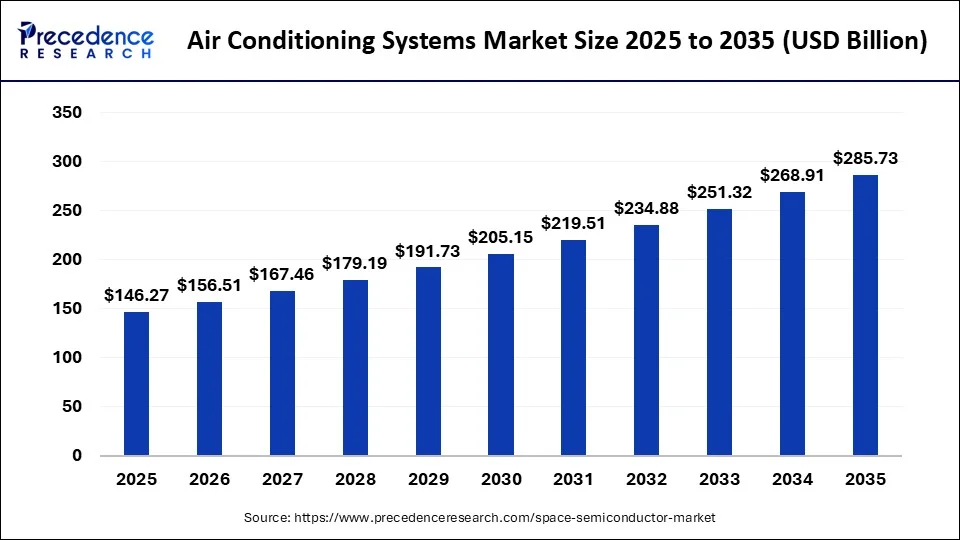
This data underscores why solar companies should prioritize hybrid solar AC systems: market expansion means faster ROI through incentives like the U.S. Investment Tax Credit (still at 30% in 2026) and state rebates.
Calculating the ROI: Cost Savings with Solar AC Installations
For businesses evaluating "hybrid solar AC systems cost savings," the numbers are compelling. Upfront costs for a 5kW system range from $15,000-$30,000, but payback hits 4-6 years via 60-80% bill reductions. Annual ROI reaches 12-28% for on-grid setups, outperforming many investments.
Hybrid systems with storage amplify savings: reduce bills by 60%, add outage protection, and enable peak shaving—saving 30% more via batteries. In high-usage scenarios, like running a 1.5-ton AC, solar offsets 70-100% of loads, yielding yearly savings of $700-$1,200 per unit.
Federal incentives end post-2026, so acting now locks in 30% credits, dropping effective costs by thousands. Long-term, systems last 25 years, with minimal O&M at $0.01/kWh versus grid rates of $0.15/kWh.
Data from U.S. Department of Energy benchmarks show cost breakdowns:
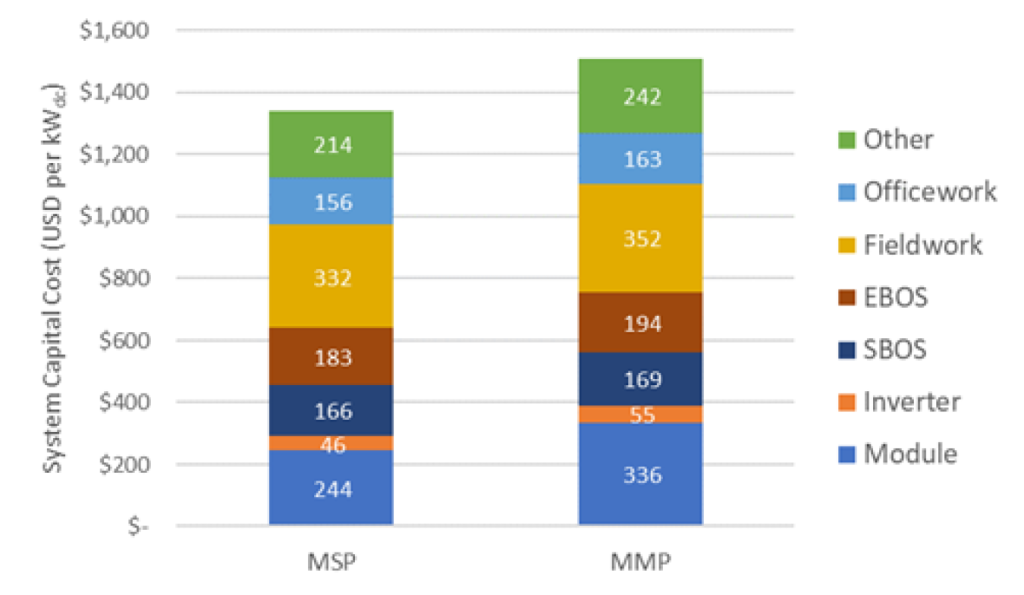
This analysis reveals soft costs (office/fieldwork) as key savings areas—optimized installations cut them by 20%. For solar businesses, these metrics highlight hybrid solar cooling as a high-ROI proposition, especially in sun-rich areas.
Pros and Cons of Implementing Solar HVAC Solutions
Weighing options for "solar cooling viability"? Here's a balanced view:
| Aspect | Pros | Cons |
| Financial Impact | 4-6 year payback; 60-80% bill cuts; 12-28% ROI | Higher initial investment ($15K-$30K) than standard AC |
| Sustainability | Zero emissions during solar hours; aligns with decarbonization goals | Grid fallback needed in low-sun periods (unless battery-equipped) |
| Operational Reliability | Peak solar matches cooling peaks; extends equipment life 200% | Requires site assessment for optimal sizing; potential shading issues |
| Scalability | Easy integration with existing PV; modular for business growth | Professional installation adds 10-20% to costs |
This table aids decisions for "pros cons solar powered air conditioning"—pros dominate for forward-thinking enterprises.
Exploring Types of Solar Air Conditioning Technologies
Diving into "types of solar AC systems," options cater to diverse needs:
- Hybrid Solar AC: Blends solar with grid; ideal for businesses, covering 70% loads seamlessly. Search term: "hybrid solar cooling systems."
- DC-Direct Solar Units: Powers AC straight from panels, minimizing losses (up to 15% efficiency gain). Best for off-peak operations.
- Off-Grid with Storage: Batteries ensure 24/7 cooling; suits remote sites, with 30% extra savings via arbitrage.
- Solar-Assisted HVAC: Retrofits panels to existing units, offsetting 50-70% power without full replacement.
These technologies leverage 2026 advances like smart inverters, making solar HVAC accessible for varied applications.
Sunpal's Expertise in Solar Cooling Integration
As leaders in solar energy, Sunpal delivers customized hybrid solar AC systems optimized for your operations. We assess solar potential, recommend HJT/TOPCon panels, and integrate storage for maximum ROI. With our solutions, achieve 60% bill reductions and qualify for incentives.
Searching for "solar AC installations for businesses"? Contact Sunpal for a free audit—unlock sustainable cooling today.
The Future of Solar Powered Cooling: A Sustainable Shift
In 2026, hybrid solar AC systems represent a game-changer, blending innovation, savings, and eco-benefits. With markets growing at 12% CAGR and efficiencies soaring, businesses can slash costs while going green. Embrace solar cooling viability now for long-term gains—the era of efficient, renewable HVAC is here.